Red, White and No More Blue

This is an unusual July for me. Until this year, the most significant date on the calendar typically was July 4th – firecrackers, red white and blue, muy Americano.
This year in Lima, July 4th was just another Friday. I didn’t even remember it was a holiday until a friend from Florida sent an email wishing me a Happy Fourth. It was thoughtful of her to remember her old friend in exile, but to be honest, the event felt insignificant here in the southern hemisphere. I tried to conjure that 4th of July feeling, and all that came to mind was grilled hot dogs – the smell of them, actually. An oily meaty nitrate smell. There’s an analogy in there about my feelings toward America, but I’m not going to pursue it.
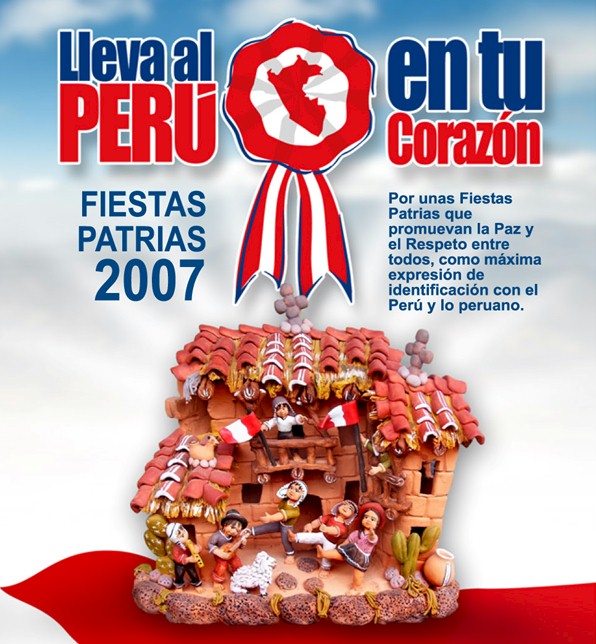
I’m more interested in this Fiestas Patrias thing, which Peruvians celebrate on July 28th. Fiestas Patrias is more than just Peru’s Independence Day; it is a patriotic season that builds up for a month until everything visible object is covered in red and white, the colors of the Peruvian flag.
The stores have big red and white flags hanging outside; people (voluntarily) wear Fiestas Patrias pins; 80-page catalogs from electronics stores like Hiraoka announce mega Fiestas Patrias sales that last for weeks.
And workers and students get substantial amounts of time off for FP, more than what people in the USA get for July 4th. Many people in Peru take one- or two-week vacations. El Hijo’s colegio (primary and secondary school) suspends classes for three weeks, as do most other schools in Lima. The nearest comparison I can make is to the U.S. holiday season.
Fiestas Patrias is like Christmas in July minus the presents, but with lots of pisco, chorizos and folkloric dancing.
Fiestas Patrias doesn’t commemorate Peru’s actual emancipation from Spain. July 28, 1821, is the date on which Argentine liberator Gen. Jose de San Martin declared Peru independent of Spanish rule. After three years of war, Gen. Sucre defeated the Spanish troops at Ayacucho, ending Spanish rule in South America. Spain tried to regain its colonies but didn’t succeed. In 1879 it finally recognized Peru’s independence. You can read more about it on the U.S. Library of Congress’ Peru Country Study page.
Here are some dancers in Lima performing on July 28:


Barbara
I am an American writer who lived in Lima for seven years (2007-2014), where I covered Andean traditions, melting glaciers and daily life in the capital for Miami Herald, MSNBC and Huffington Post. I now live and work in northern Florida where I champion climate change advocacy and compassionate, affordable eldercare.